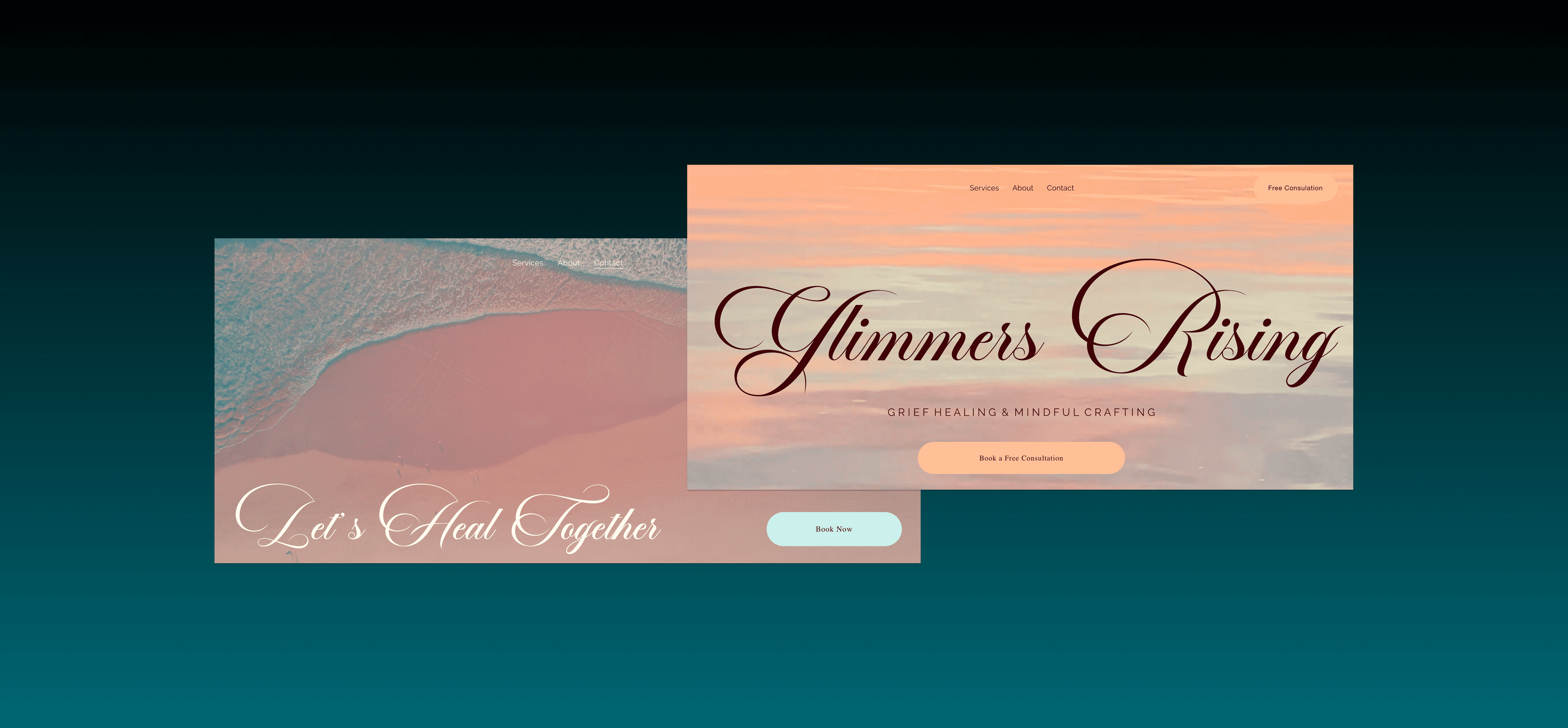
Designed a wellness website focused on creating a calm, intuitive experience that guides users toward healing services while building trust and emotional connection.
Category:
UX Design & Web Design
Client:
Glimmers Rising
Duration:
2 Months
Location:
Remote
Overview
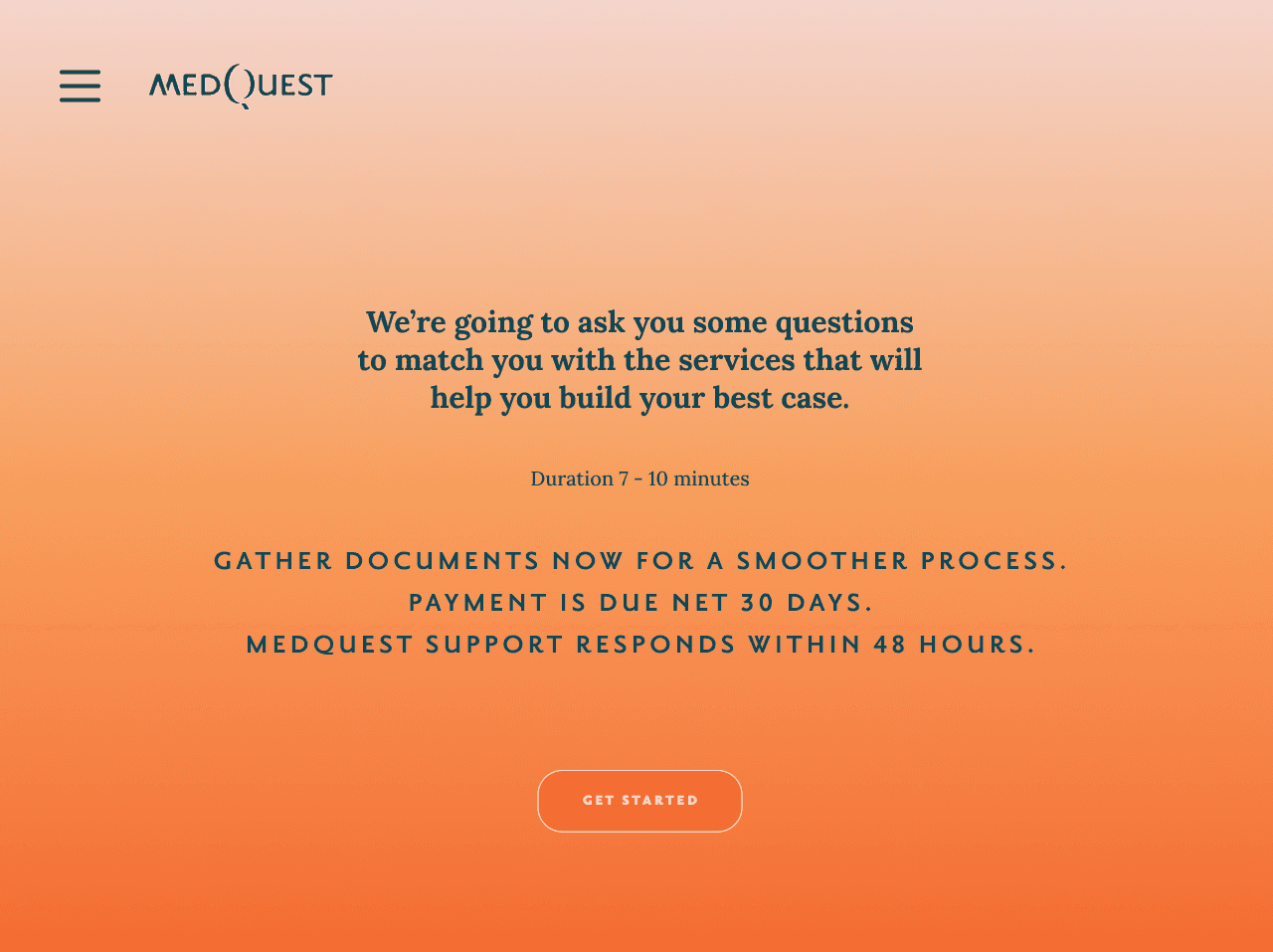
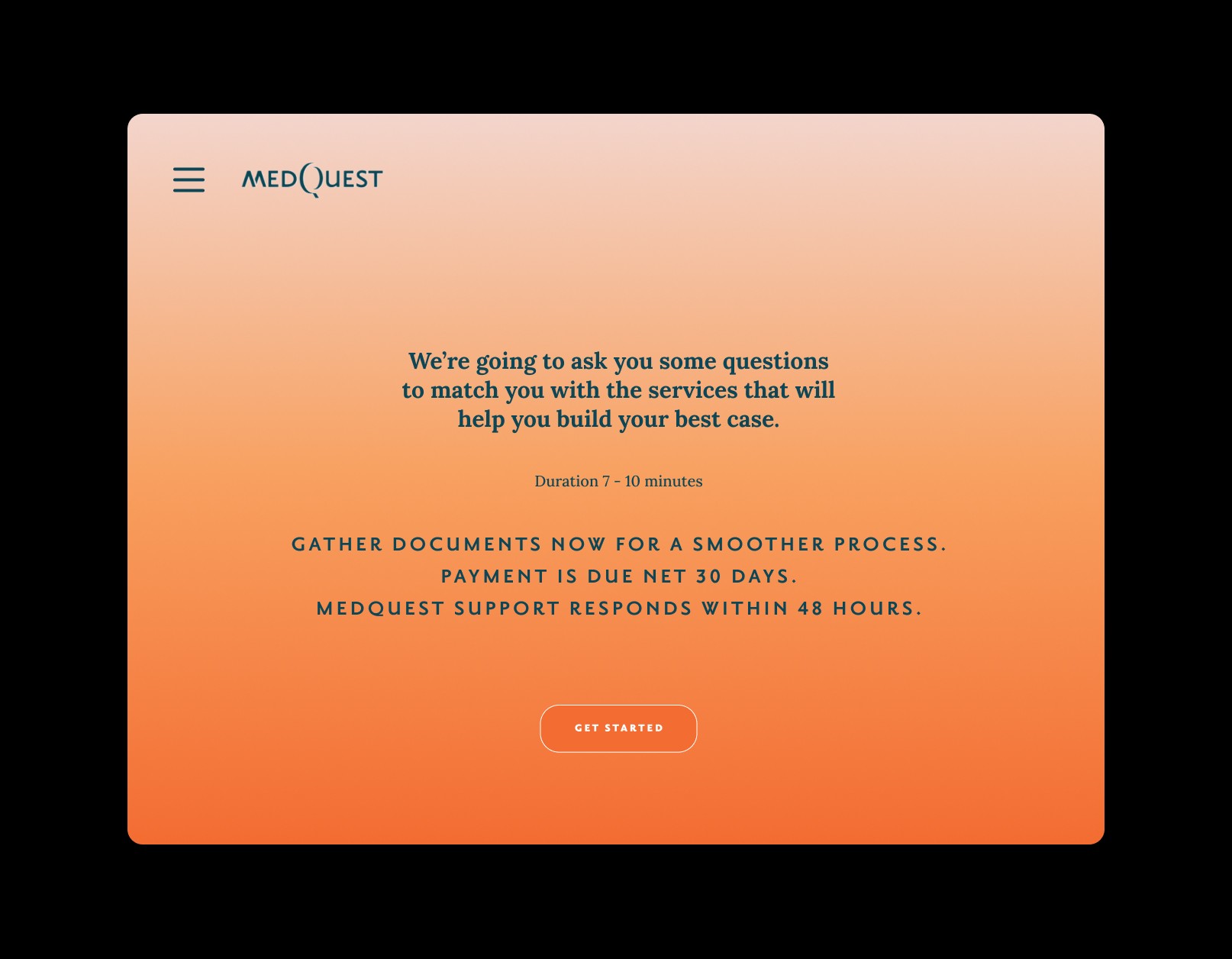
MedQuest is a legal platform that helps law firms order and manage medical records for case preparation.
I redesigned a complex ordering experience to reduce friction, improve clarity, and enable users to complete tasks more efficiently and confidently.
The Problem
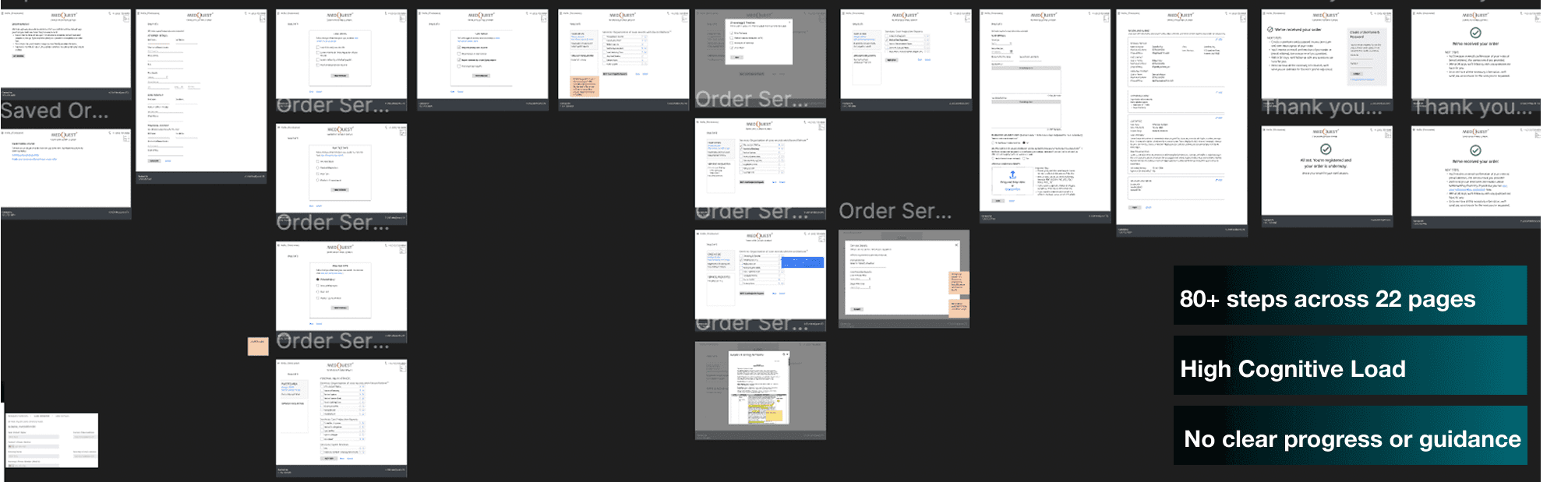
The ordering experience was overly complex and time-intensive, requiring over 80 steps across 22 screens to complete—leading to confusion, inefficiency, and high cognitive load. These challenges were further constrained by legacy system limitations and accessibility requirements.
80+ steps across 22 screens —> 20+ minutes to complete…
Key Insights
Users were overwhelmed by the number of steps and decisions
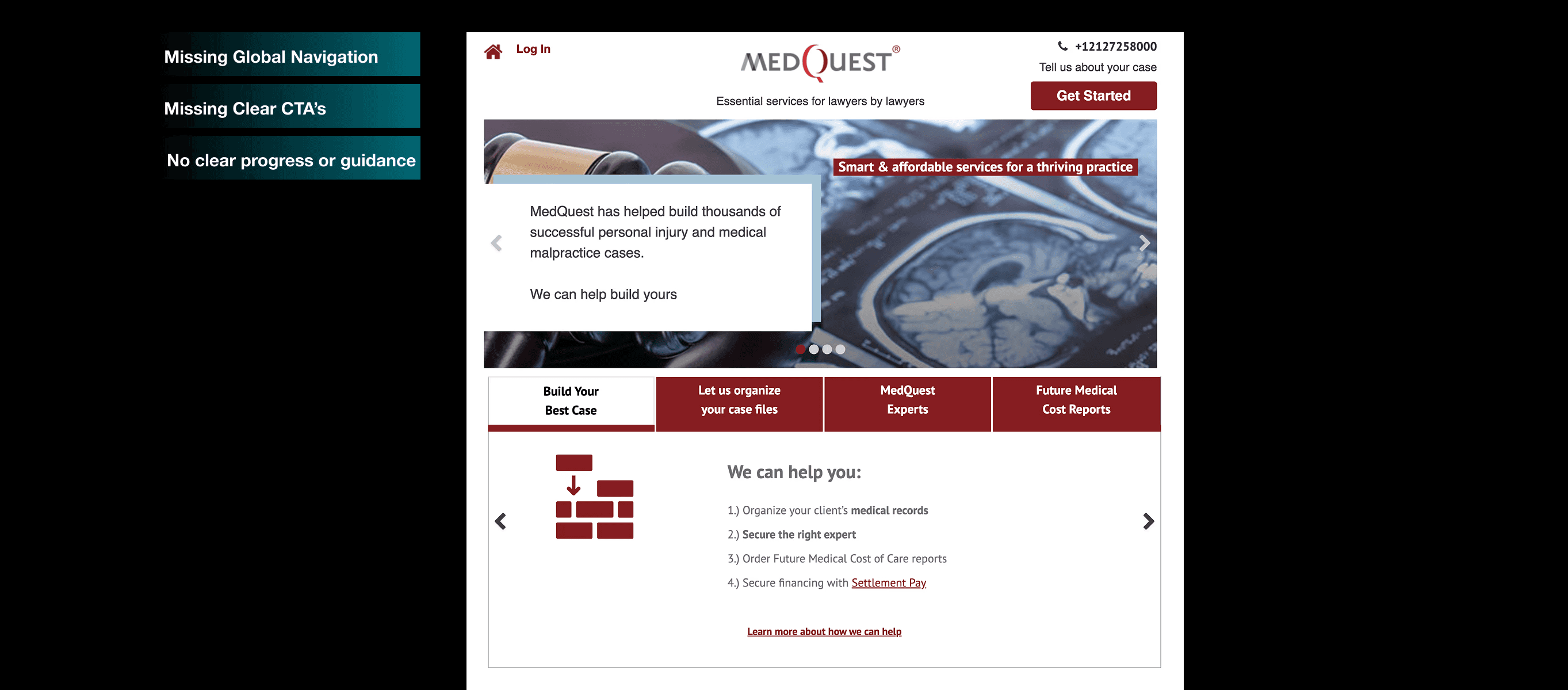
Lack of guidance created hesitation and inefficiency
Branding inconsistencies reduced trust and clarity
The Goals
Transform a complex, multi-step process into a clear, guided experience—improving task completion, increasing user confidence, and supporting business goals such as higher order volume and stronger brand credibility.
The Approach
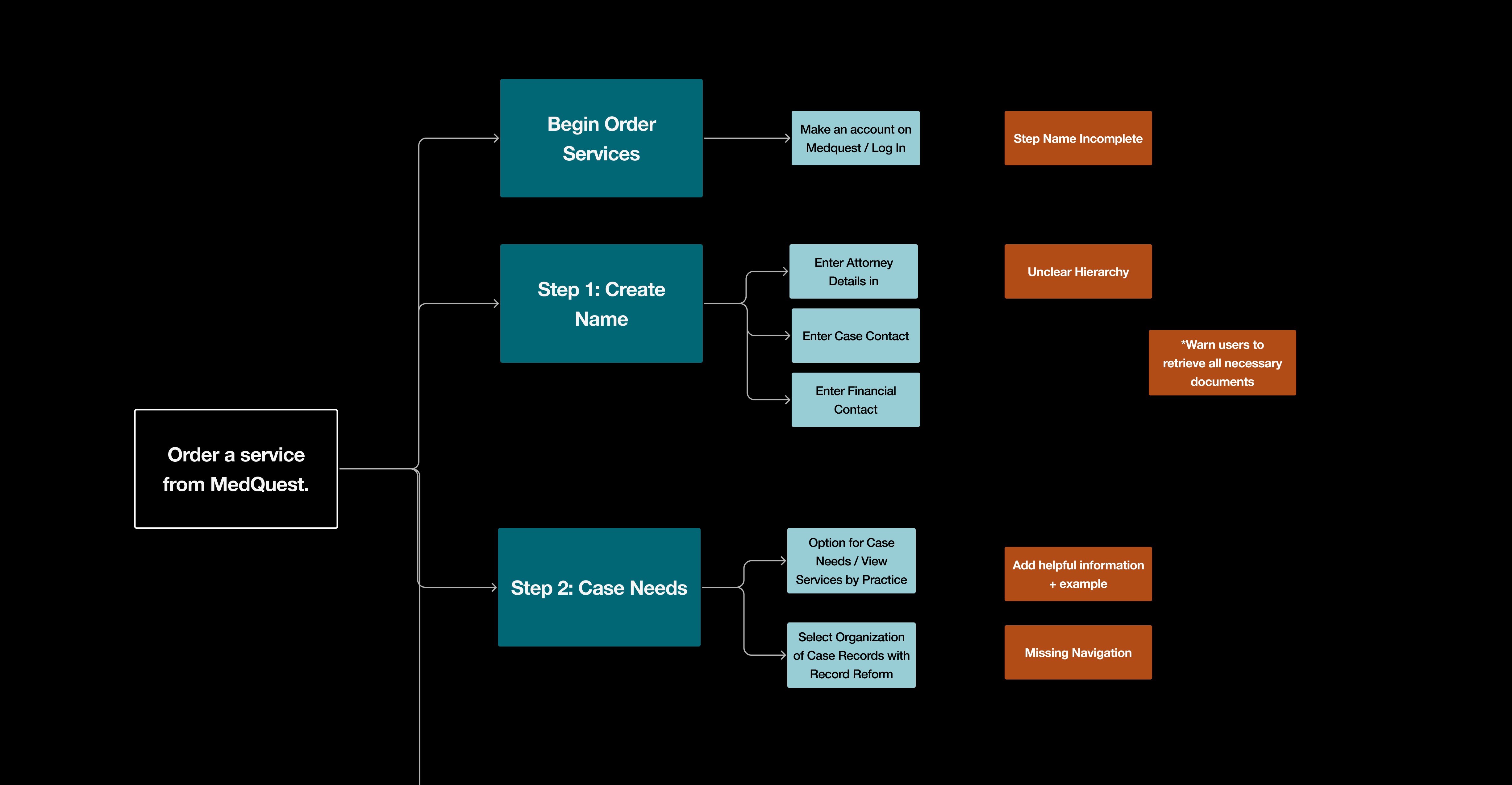
Analyzed the full user flow to identify friction points and inefficiencies
Evaluated user behavior through persona-driven insights
Designed solutions within legacy system and accessibility constraints
Iterated through usability testing and stakeholder feedback
The Solution
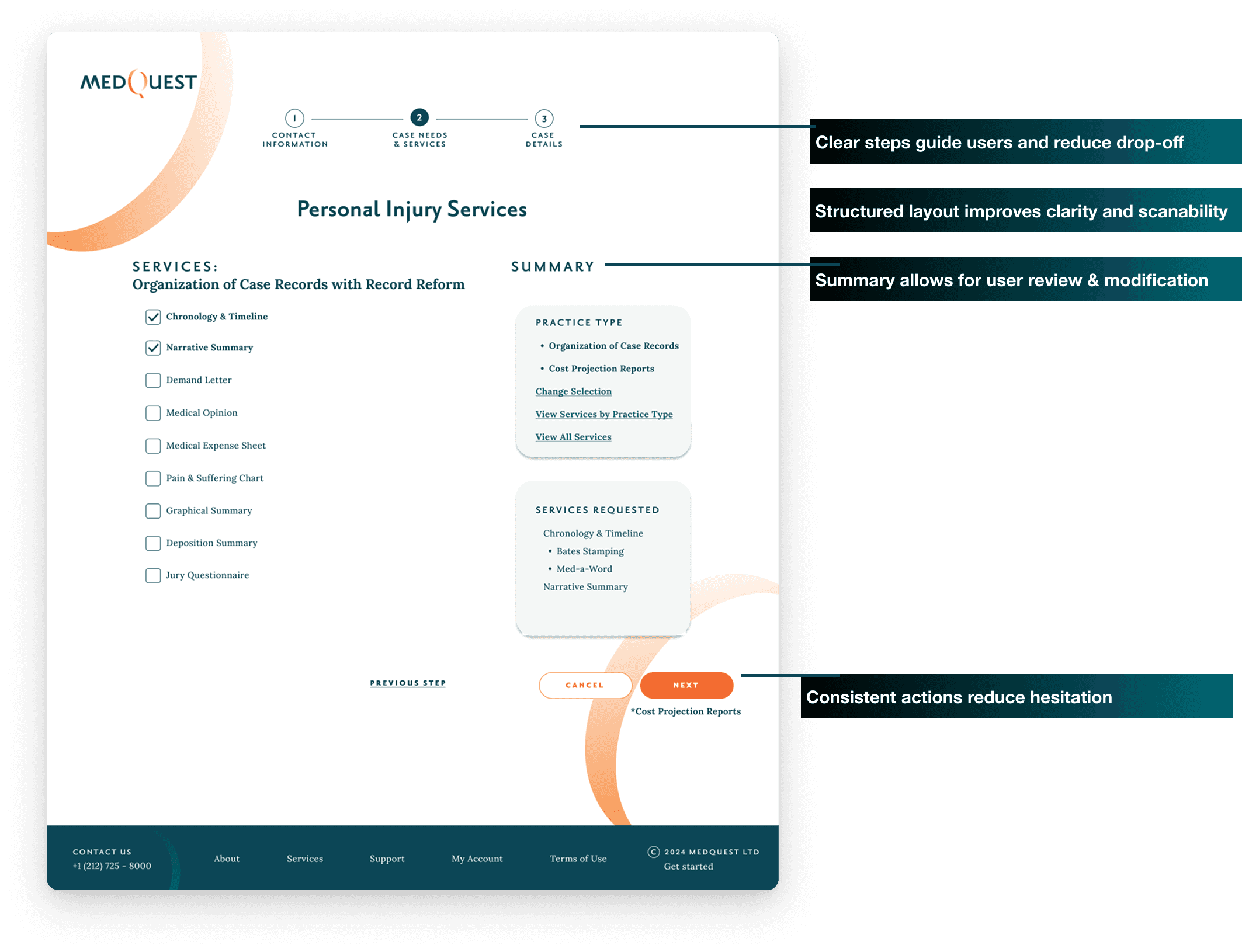
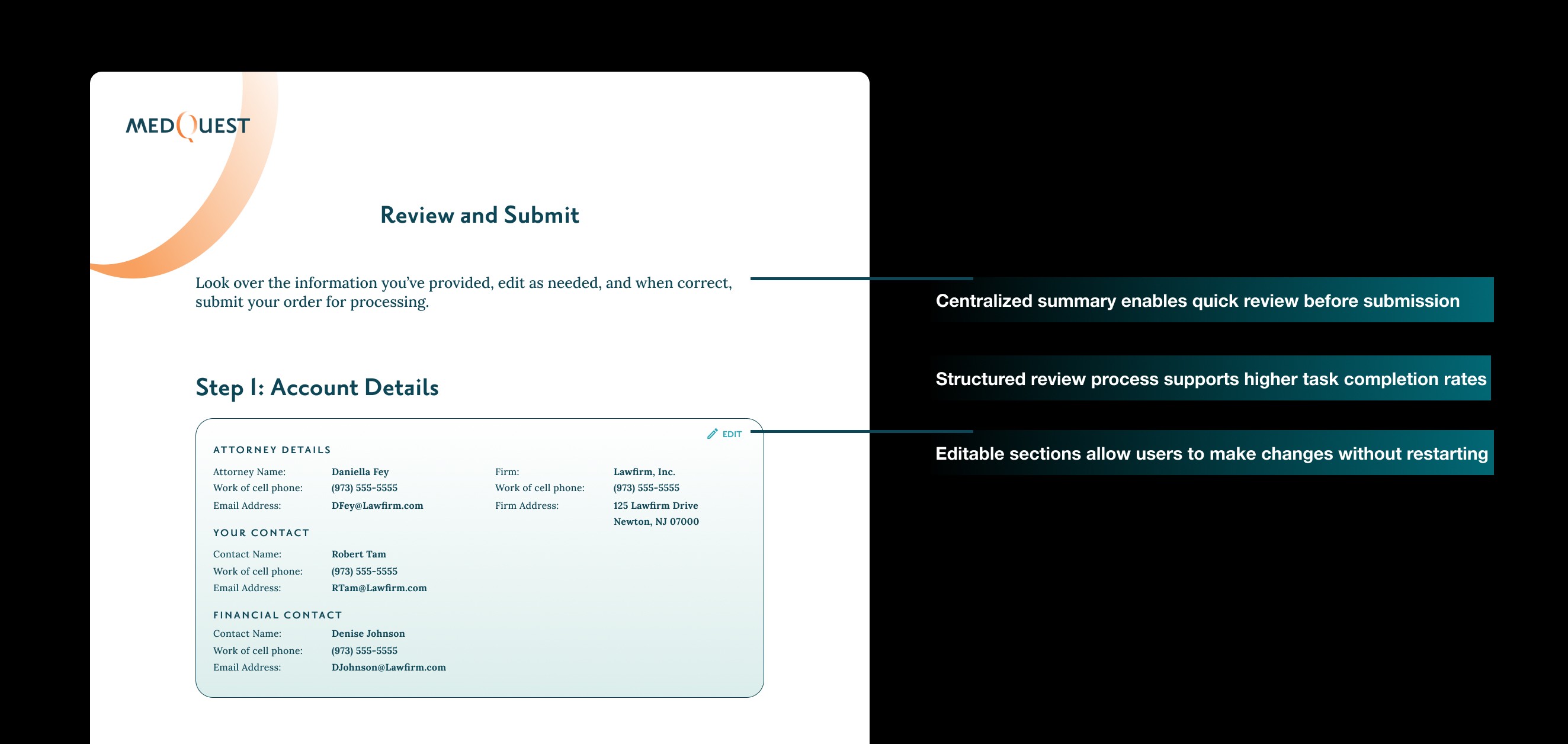
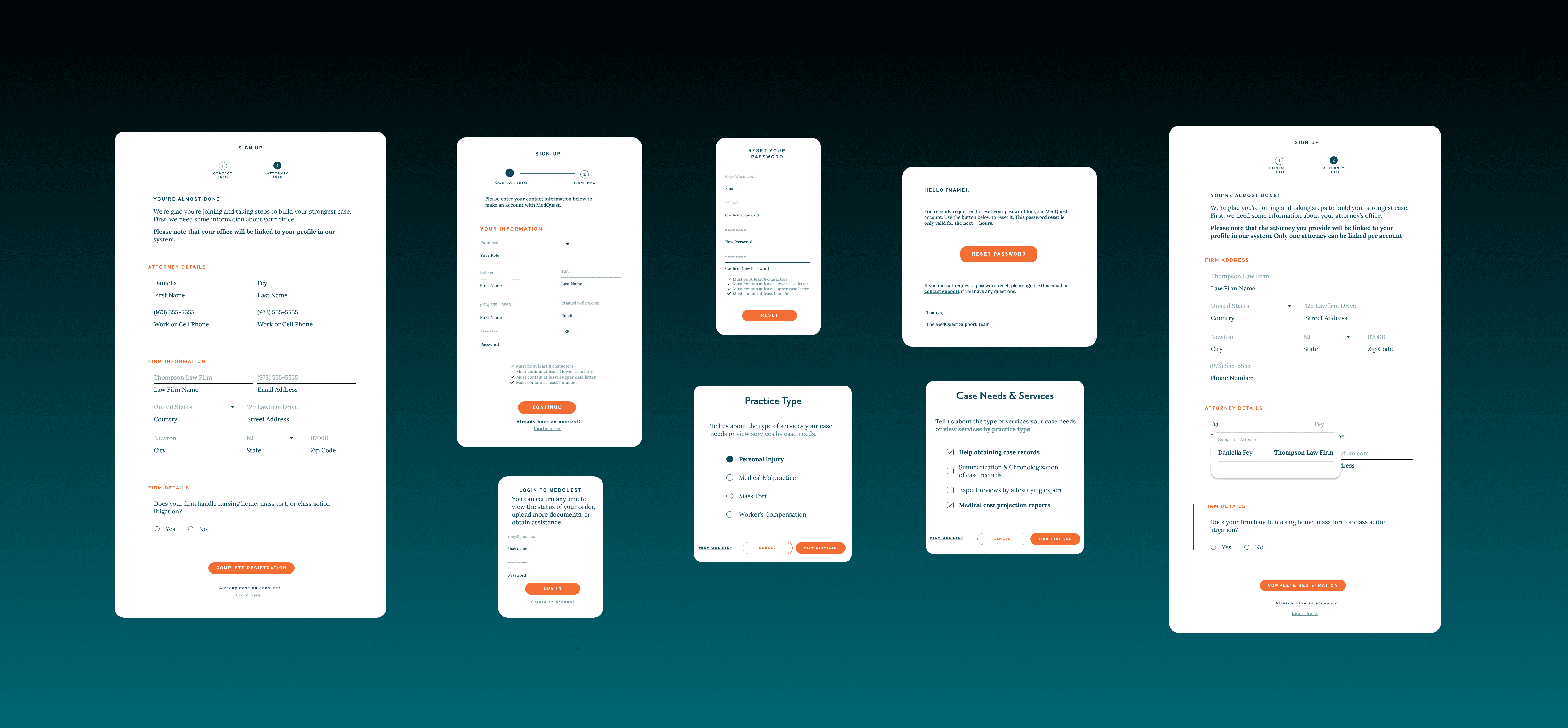
I replaced the overwhelming 20 minute process with a step-by-step structure and clear progress indicators.
Guided Flow:
Introduced a clear, step-by-step flow with progress indicators, helping users understand where they are and what comes next—reducing confusion throughout the process
The interface was also aligned with MedQuest’s brand to create a consistent, professional experience that reinforces trust
Reduced Cognitive Load:
Simplified service selection by reducing unnecessary options and organizing content more clearly, making it easier for users to make decisions without feeling overwhelmed
Design Constraints & Iteration
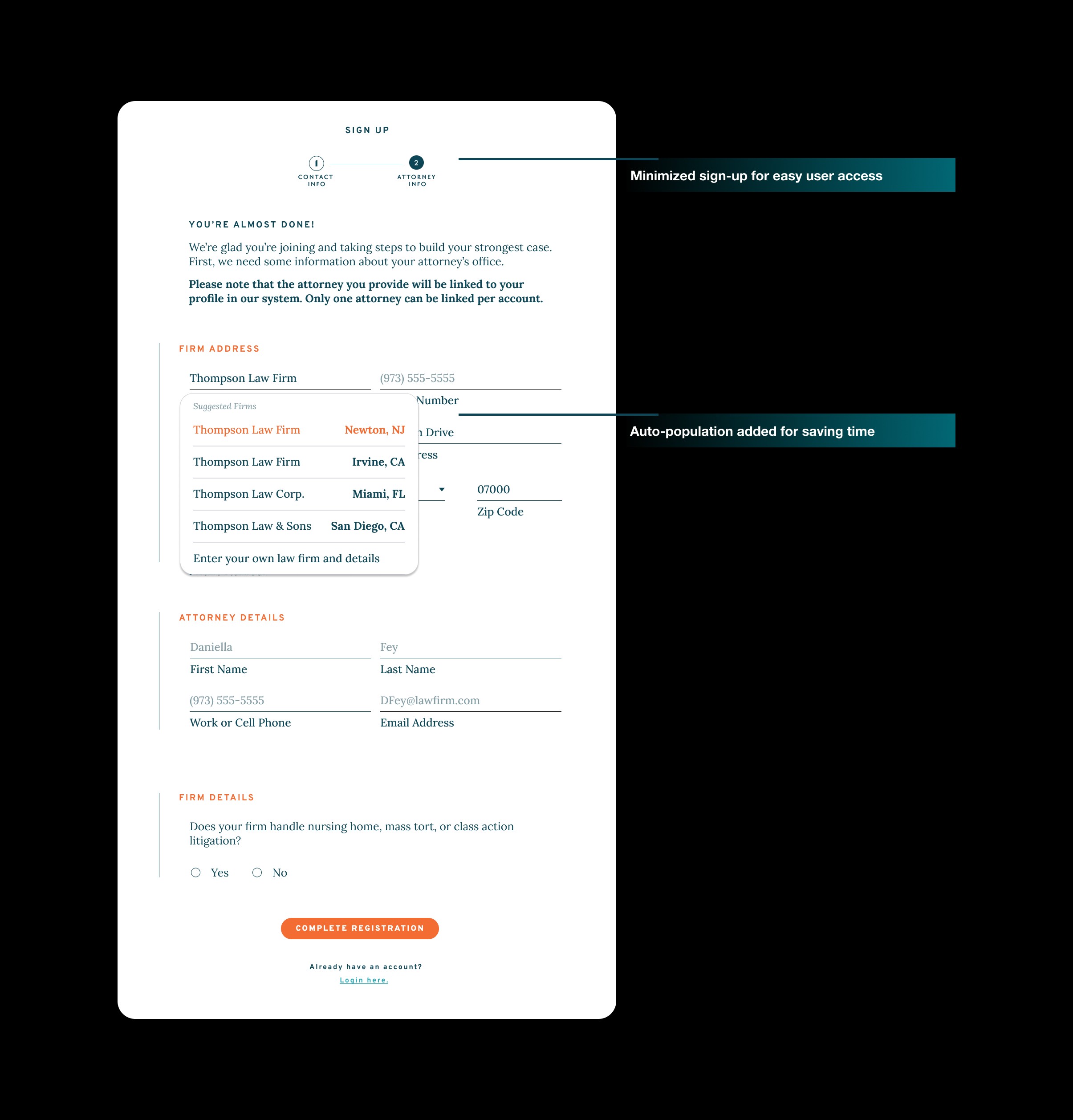
Technical constraints and tight timelines required a sign-up flow at the start. To reduce friction, I explored ways to simplify account creation by focusing on only essential information.
Through collaboration with engineering and stakeholders, we determined that attorney and firm details were required due to backend dependencies. The final solution streamlined this into a two-step flow with auto-populated information, reducing redundancy and keeping users moving efficiently.
Streamlined Onboarding:
Redesigned the required sign-up into a simplified two-step flow, capturing essential information while minimizing friction. Auto-populated user details reduce redundancy and keep users moving through the experience
A 20-minute workflow shouldn’t feel like a maze.
The Impact
Reduced Friction:
Reduced friction across a previously 20+ minute workflow to an 8 minute workflow by simplifying navigation, eliminating redundancy, and improving clarity at each step
Increase in User Satisfaction:
75% measured increase in Usability Testing
Increase in Task Completion:
Projected 30% increase in task completion rate due to simplified flow and decreased completion time
Key Takeaways
Simplifying complex systems requires both structural and visual clarity
Clear guidance reduces user hesitation and improves efficiency
Strong UX balances user needs with real-world constraints